

When the Screen Went Blank: A Real-Time Leadership Lesson on Trusting Your TEAM
Mar 12, 2026The giant screen went black.
I was about to speak in front of 1,800 executives.
My laptop had just crashed.
No video. No display. Nothing.
And the host had already started introducing me.
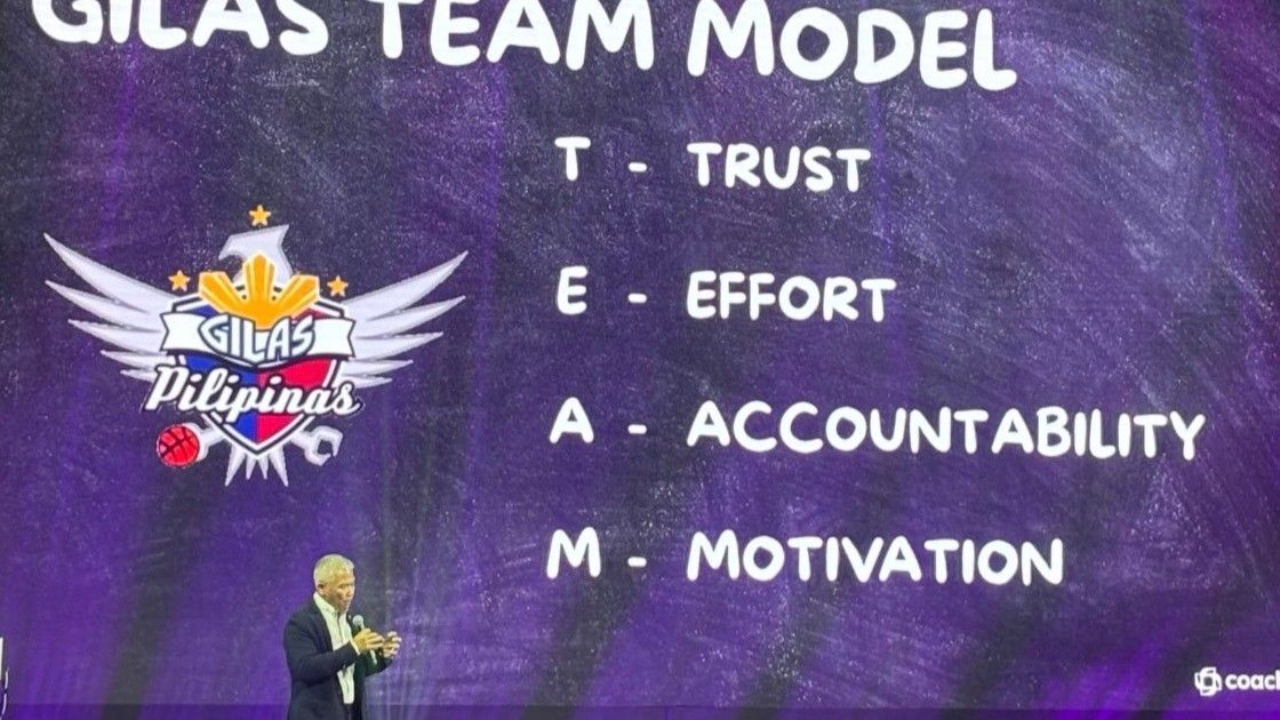
Last weekend, I had the privilege of speaking at a leadership gathering about something I care deeply about: TEAM—my framework on how high-performing groups sustain excellence under pressure.
But before the talk could even begin…
the lesson arrived early.
Unlike many keynote speakers, I don’t use PowerPoint decks for my plenary talks.
Instead, I use actual game footage.
I play a clip. Pause it. Rewind it.
Then I draw on the screen—just like diagramming a basketball play during a timeout.
From those moments in the game, we extract leadership lessons:
Decision-making under pressure Trust among teammates The value of hustle stats Accountability for execution The mindset required to win
It turns the talk into something closer to a live coaching session than a presentation.
So an hour before the talk, I arrived for the tech run.
Audio? Perfect. Video? Perfect. My Mac connected and sitting on the podium, ready.
Everything was set.
Then, just as the host began introducing me…
the giant screen suddenly went black.
No signal.
The AV team scrambled to restore the connection.
Still nothing.
So I did what most of us do when technology fails.
I restarted my Mac.
Which meant waiting for it to reboot.
In front of 1,800 executives.
My team and the tech staff started to panic.
But right before I walked onstage, I did something I learned from years in sports.
I closed my eyes. I bowed my head. I took three deep breaths.
And I made a quiet commitment to myself:
“Laptop or no laptop… this will still be a great talk.”
Because in leadership—as in sports—you don’t control every situation.
But you always control your response.
I needed to buy time for the laptop to reboot.
So I had to change my opening.
Completely.
Instead of going straight into the video clip I had planned, I asked a question that was not in my script.
I looked at the audience and said:
“Leaders… when your people see you, when your clients face you, when you interact with a customer…
are you good news, or are you bad news?”
Then I paused.
Leaders shifted in their seats.
For a full five seconds, no one spoke.
No one moved.
You could hear a pin drop.
1,800 executives. Completely silent.
Because every leader in that room understood the weight of that question.
Standing there in that silence, I realized something.
The situation itself had already become the perfect illustration of the message.
Because the essence of TEAM is not what happens when everything works perfectly.
It’s what happens when things don’t.
In basketball, we practice plays.
But championships are rarely won because the play runs exactly as drawn on the board.
They’re won when players make the right play when:
the play breaks down
the clock is running out
the ball bounces the wrong way
something unexpected happens
The players who win are the ones who stay composed and adjust.
Organizations are no different.
The real test of a team is not during the planned presentation.
It’s during the unscripted moment.
When the screen goes blank.
When the plan fails.
When pressure rises.
In those moments, great teams rely on four disciplines.
T — Trust
Trust means letting go of control.
As the seconds ticked by and I was being called to the stage while the Mac was still rebooting, there was nothing more I could do.
I had to trust that my team and the tech crew would solve the problem.
E — Effort
All in. All out.
Someone steps up. Someone moves. Someone finds a solution.
No spectators.
Two members of my team took charge and got the video running again.
Those are the unseen hustle stats without which the main job cannot be done.
A — Accountability
No blame-storming. No finger-pointing. No “that’s not my area.”
Even though the glitch wasn’t my fault, I still had to walk on that stage and face the moment.
Leadership means owning the situation.
M — Motivation
The mission matters more than the disruption.
I was there to add value.
And helping develop the next generation of Filipino leaders—men and women who lead not only to make a profit but to make a difference—is a mission that matters deeply to me.
Eventually, the laptop restarted.
The screen came back.
The clips played.
And the talk continued exactly as planned.
But the truth is, the most powerful leadership lesson of that morning didn’t come from the videos.
It happened before the talk even started.
Because leadership—like sports—comes down to one thing:
Staying composed when the play breaks down.
Every leader eventually faces a moment when the plan collapses.
The slides don’t load.
The deal falls apart.
The market shifts.
The team makes a mistake.
In those moments, preparation matters.
But composure matters more.
In basketball we have a saying:
“You can’t control every bounce of the ball.”
But great teams always know how they will respond—even to the bad bounces. 🏀
